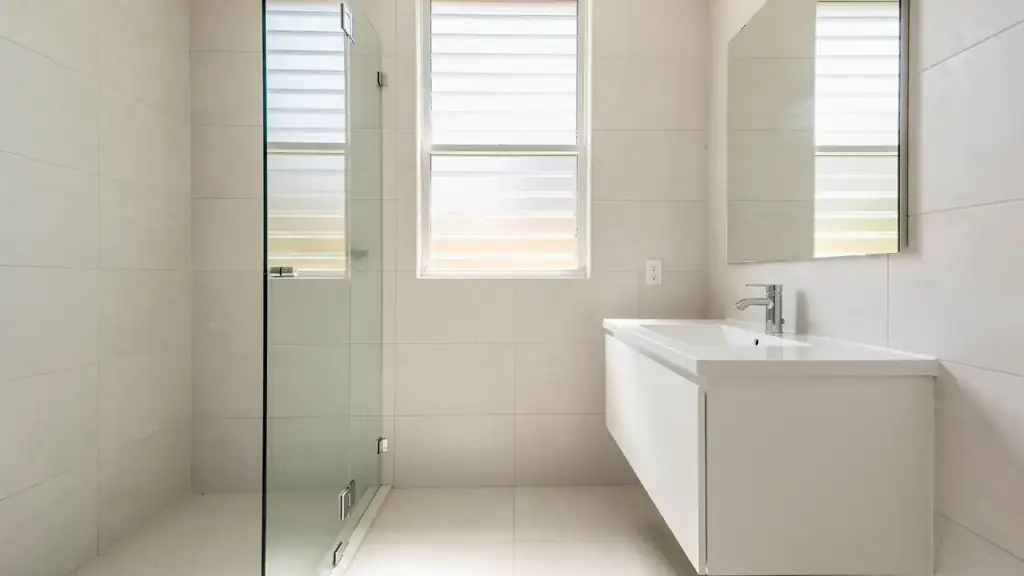
What fails in a Florida bathroom
Miami air sits at high humidity most of the year, and a bathroom is the room that adds a hot shower to that. Moisture gets into every joint it can find. Grout is the first to give: it is porous, it darkens, then it crumbles and lets water behind the tile. Caulk at the tub and the corners hardens and splits, and once the seal is open every shower pushes a little more water into the wall.
Ventilation decides how fast all of that happens. A fan that is weak, clogged with lint or vented into the attic leaves the room wet long after the shower is off, and you see it as mildew on the ceiling and a film on the mirror.
The vanity is the quiet casualty. A slow drip at a supply line or a drain fitting wets the cabinet floor for months, and particleboard swells and softens long before you notice. Water at the vanity is worth chasing down early, because the cabinet is rarely the only thing it has reached.
How the remodel runs, step by step
It starts with an assessment of what the room needs, then a detailed plan, so the scope is agreed before anything is torn out. Demolition comes next: old tile, a tired vanity and worn fixtures come out, and that is when the walls and the floor underneath get a real look.
Wall prep is where a bathroom job is won or lost. Damaged board is cut out and replaced, the surfaces are made flat and sound, and only then does tile go up, with level lines, even joints and grout that is packed in fully. A new vanity is set level and plumb, the top and sink go on, and the faucet and supply lines are connected and tested for drips before the job is called finished.
Fixtures go in last so nothing gets scratched: faucet, shower trim, towel bars, mirror and lighting. The team keeps you informed at each step, in English or Spanish, so you always know what is happening in your house.
After the job: caulk, fan and grout
A new bathroom stays new longer with a few habits. Run the exhaust fan during the shower and for a while after, so the room dries instead of the walls. Wipe down the tile and glass now and then and the film never gets a chance to set.
Look at the caulk line along the tub every few months. When it starts to lift or darken, it is a small job to replace, and replacing it early is what keeps water out of the wall. Grout takes a gentle cleaner and a soft brush; harsh scrubbing wears the joint down.
If the vanity ever starts to smell damp or the cabinet floor looks stained, check the supply lines and the drain first. Catching that drip in week one is a small repair. Catching it in month six is a cabinet.