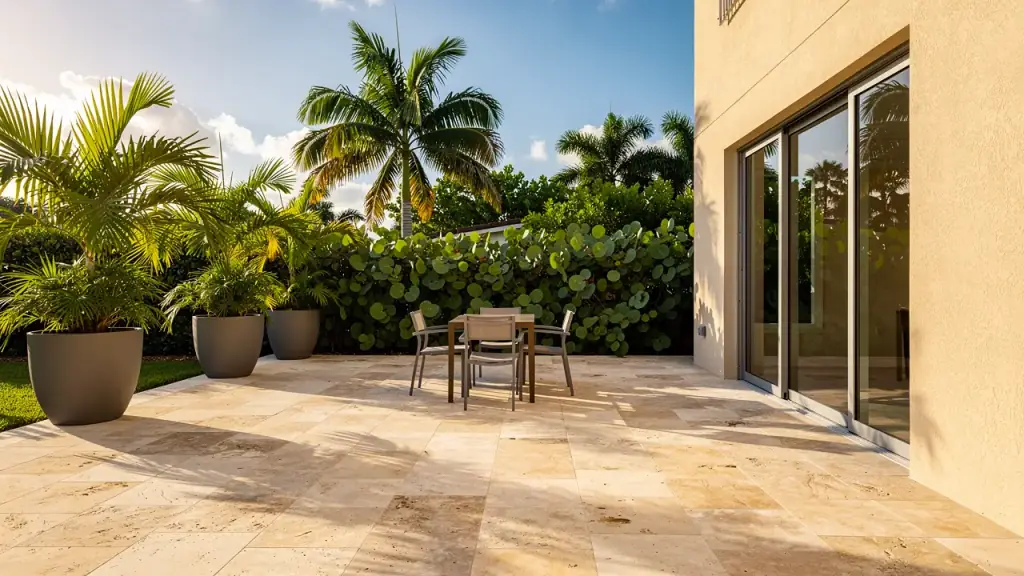
What a patio has to survive down here
A South Florida patio gets hit by three things most places never see together: summer downpours that arrive in twenty minutes, sandy soil that washes out from underneath anything laid on it badly, and a sun that bakes the surface until it is too hot to cross barefoot.
That is why the best-looking patio is not always the one that lasts. Pavers laid straight on loose sand will rock and sink at the first heavy season. A slab poured with no fall will hold a puddle against the wall of the house, and in a block home that water finds its way in.
So the job starts with the yard, not the catalog. Where the water already runs, where the shade falls in the afternoon, and which door you actually walk out of all decide the shape before a single stone is picked.
How a patio is laid, layout to last joint
It begins with a thorough assessment of the space and what you want to use it for, then a detailed plan you can see before work starts. After that we mark the layout on the ground, so you can walk the outline and move an edge while moving it is still free.
The part nobody sees is the part that matters. The soft topsoil comes out, a crushed rock base goes in and is compacted in layers, and only then do pavers or a slab go on top. The surface is set with a slight fall away from the house, enough that rain leaves on its own without looking tilted.
Edges get locked in so the field cannot creep outward, joints are filled and swept, and we keep you informed at every step so there are no surprises when you come home to it.
Living on it after the last paver
Pavers in full sun do best with a sealer, which slows fading and keeps the joint material from washing out in the rains. Light colors stay cooler underfoot than dark ones, worth knowing if the patio faces west.
Weeds find any joint with a little dirt in it, so a quick sweep and a pull every few weeks keeps them from taking hold. If one corner starts to dip after a wet season, it is a small fix to lift the pavers, add base and set them back, and far easier to catch early than late.