What makes a kitchen look dated
Usually it is the layout before it is the finish. A fridge door that blocks the walkway, a sink too far from the stove, a corner nobody can reach: you stop noticing them, but you walk around them every day.
Then the Miami air does its part. Humidity works on old cabinets from the inside, so doors swell and stick, hinges sag, and the boxes under the sink go soft and flaky. Laminate countertops lift at the seams near the sink, and once water gets under the edge, it keeps going.
Most of this is fixable without gutting the whole house. The question is whether a refresh will hold or whether the room needs to be reworked from the layout out.
How the remodel runs, one step feeding the next
It starts with a thorough assessment of the room and what you want from it, followed by a detailed plan that covers the layout, the cabinets, the countertops and the fixtures together. Planning them as one job is what stops a new countertop from landing on cabinets that do not fit it.
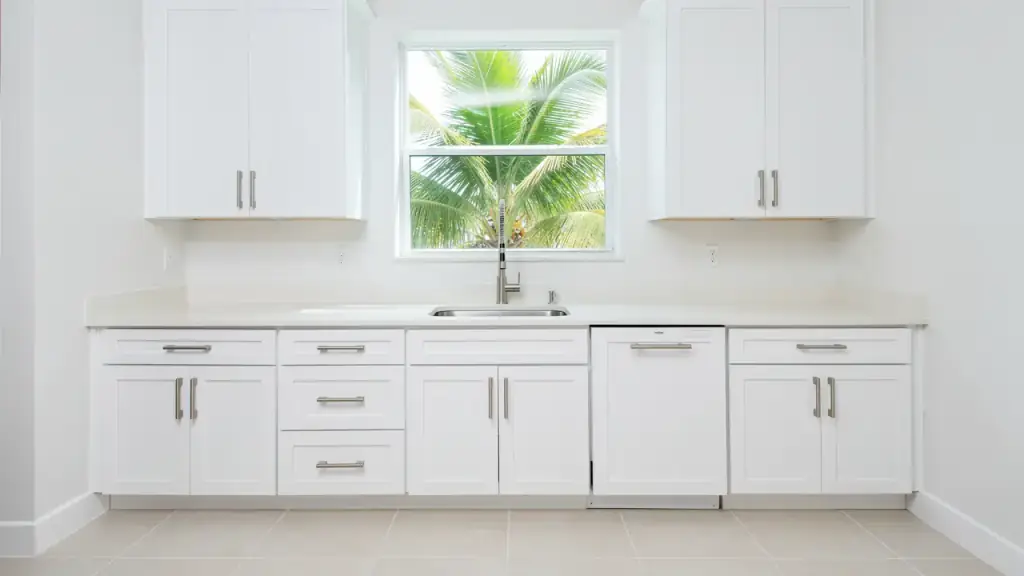
Cabinets go in first, set level and tight to the wall. Block walls in older Miami homes are rarely perfectly square, so this is where patience shows. Countertops come next, measured off the cabinets as they actually stand rather than as the drawing said they would.
Sink, faucet and the rest of the fixtures go in last, then the backsplash and paint. You are kept informed at every step, so you know what happens next and what it needs from you.
Living with the new kitchen
Wipe spills off countertops when they happen, use a board instead of cutting on the surface, and keep hot pans on a trivet. Stone and some other surfaces want a fresh sealer now and then, so ask which one you have and how it likes to be cleaned.
Cabinet doors last longest when the kitchen can breathe. Run the vent hood while you cook, wipe the doors beside the stove dry, and keep the area under the sink clear so a slow drip gets noticed early. When you are ready for the next room on the list, the planning is the same.