Planning a Patio for South Florida Rain: Drainage, Base and Sun
A patio that lasts through South Florida summers is built on slope, a solid base and a clear plan for where the water goes.
October 27, 2026 · 4 min read
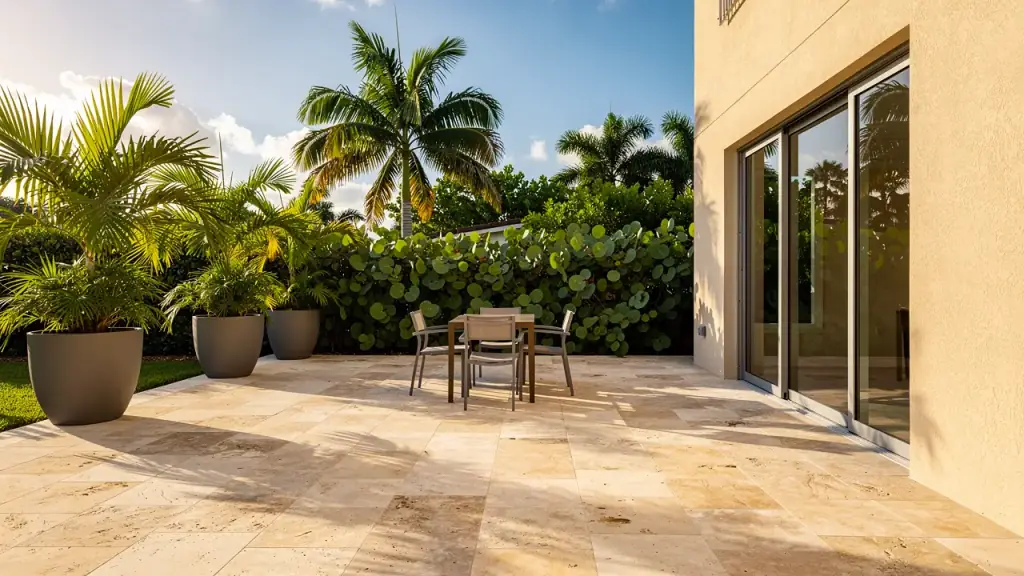
A patio looks like a simple project: pick a surface, lay it down, set out the chairs. In South Florida, the surface is the last decision, not the first. What decides whether a patio still looks good in five summers is what is under it and where the rain goes when it hits it. Here is how to think it through before anyone breaks ground.
Start with where the water goes
Summer storms in Miami can drop a lot of rain quickly, and the ground is flat and often sandy or rocky. A patio that is built perfectly level will hold puddles, and a patio that slopes toward the house will push water against the wall. The surface should fall gently away from the building, toward a lawn, a planting bed or a drain, never toward a door or a stucco wall.
Look at the yard in the rain, if you can. Where does water already pool? Where does it run? A patio built on top of a natural low spot will fight the yard every storm. Sometimes the better choice is a different location, or a plan that includes a drain or a graded path for the water to leave.
The base is the real structure
Pavers, tile and poured concrete all depend on what is below them. For a paver or stone patio, that means digging out the top layer of soil, then building up compacted layers of base material and a thin bed to set the pavers in. Skipping or shortening the base is the most common reason a patio sinks, rocks or develops low spots after a few rainy seasons.
A few things are worth asking about the base:
- How deep will the excavation go, and what material goes back in?
- Will the base be compacted in layers, or just raked and tamped once?
- How will the edges be held in place, so the pavers do not slowly creep outward?
- Are there tree roots, buried irrigation lines or utility lines in the work area? Buried lines should be located before digging.
Pavers or a poured slab
Both work in South Florida, and the right one depends on how you will use the space.
Pavers are individual pieces set over a prepared base. Water passes through the joints, a cracked or stained piece can be lifted and replaced, and the surface can be repaired without redoing the whole area. The tradeoff is that joints need maintenance. Sand washes out, weeds and ants find gaps, and a poorly built base will show up as uneven pavers.
A poured slab is a single surface. It is solid and easy to sweep, but it can crack as the ground moves, and a crack in a slab is harder to hide than a replaced paver. Slabs also need proper control joints and a base underneath, or they crack sooner. Finish matters as well. A smooth finish gets slippery when wet, while a textured or broomed one gives better footing after a storm.
Stone and travertine look beautiful and stay cooler in the sun than many surfaces, but they are only as good as the base and the sealing plan behind them. Ask how the surface will be sealed, how often, and what upkeep looks like in practice.
Sun, heat and shade
South Florida sun is strong for most of the year, and a patio that gets full afternoon sun can be too hot to stand on barefoot. Surface color and material change this a lot. Lighter colors reflect more heat. Darker ones absorb it. Think about where the shade falls at three in the afternoon, which is when most people actually use a patio in summer.
Plan for that shade rather than hoping for it. A pergola, a shade sail, a tree set back from the slab, or simply placing the patio on the side of the house that gets shade later in the day can make the space usable for more months of the year. A tree is also a root and leaf decision, so keep that in mind for the base and drainage.
Edges, joints and the details that last
Finish details are easy to overlook and hard to fix later. Edge restraint keeps pavers from spreading. Joint sand or polymeric sand keeps the surface locked together. Where the patio meets the house, a clear gap or flashing detail keeps water from tracking into the wall. Where it meets the lawn, the edge should sit slightly above or flush with the soil so mowing is easy and the edge is not undermined by runoff.
Questions to ask before a patio goes in
- Which way will the surface slope, and where will the water end up?
- What is the plan for the base, and how deep is it?
- Does the homeowners association or the county need anything on paper before the work starts? It is worth asking early, so nothing delays the job.
- How will the surface be sealed, and how do I maintain it?
- What happens if the weather turns during the install?
A good installer will answer these without hesitating, and will walk the yard with you before quoting.
Patio installation is one of our services. See our patio page, then call (786) 275-7842 for a free quote and a walk through your yard. Every customer gets 10% off, and our team includes Spanish speakers.
JRC Sandy Handyman LLC, (786) 275-7842
Call (786) 275-7842More articles
Painting a Miami Block House: Humidity, Stucco and What Good Prep Looks Like
Most peeling on a Miami block house is decided before the first coat goes on, so here is what to check and what good prep involves.
The Drywall Patch That Disappears: Holes, Water Stains and Finishing Right
A patch you cannot see after painting comes down to backing, thin layers, patient sanding and primer, and a stain means the leak comes first.